FILMS AND VIDEO GAMES
MOTION PICTURE RATING SYSTEM
A motion picture rating system is designated to classify films with regards to suitability for audience in terms of issues such as sex, violence, substance abuse or other type of mature contents. A particular issued rating can be called a certification, classification or simply rating. Rating typically carry age recommendations an advisory or restrictive capacity and are sometimes given the lieu censorship.
In some countries e.g. Australia, an official government body decide on the rating while in other countries e.g. USA it is done by industry committee with little of any official government status.
In most countries however films that are considered morally offensive are censored.
The influence of a specific factor deciding a rating vary from country to country. Example films with mild sexual contents are restricted to older viewers in USA while sexual themes are handled leniently in German.
Other factors may or may not influence rating process such as a film being set within a non-fictional historic context.
CENSORSHIP
Censorship is the suppression free speech, public communication or other information that maybe considered objectionable, harmful, sensitive or inconvenient as determined by the government, media outlets, authorities or other groups or institutions.
Government, private organisations and individuals may engage in censorship. When an individual such as an author engage in censorship it is referred to as self-censorship.
MOTION PICTURE ASSOSIATION OF AMERICA FILM RATING SYSTEM.
Motion Picture Association of America(MPAA) film rating system is used in the United States and its territories to rate a film’s suitability for certain audience, based on its content.
The MPAA is a voluntary scheme that is not enforced by the law, films may be exhibited without ratings. Non-members of MPAA may also submit films for rating.
RATINGS
Since the 1990s, the MPAA film ratings have been as follows;
|
If a film has not been submitted for a rating or is an uncut version of a film that was submitted, the labels Not rated(NR) or Unrated(UR) are often used.
If a film has not been rated yet the label ‘This film is not yet rated’ is used in commercials/trailers.
Rating components
Violence
Depictions of violence are generally restricted to PG and above. The violence in a PG rated film will not be intense, while violence that is both intense and persistent will generally require at least an R rating. Violence is not prohibited in G rated films, but if present will be minimal.
Language
Snippets of language that go “beyond polite conversation” are permitted in G rated films, but no stronger words are present. Profanity may be present in PG rated films, and use of one of the harsher sexually-derived expletives will initially incur at least a PG-13 rating. Multiple occurrences will usually incur an R rating as will the usage of such an expletive in a sexual context. Nevertheless, the ratings board may still award a PG-13 rating passed by a two-thirds majority if they believe the language is justified by the context or by the manner in which the words are used.
There are several known cases in which PG-13 rated films contain multiple occurrences of the word F*ck. Adventures in Babysitting, where the word is used twice in the same scene; The Hip Hop Project, which has seventeen uses; Gunner Palace, a documentary of soldiers in the Second Gulf War, which has 42 uses of the word with two used sexually; Bully, a 2011 documentary about bullying; Philomena, released in November 2013, which has two uses of the word; and The Martian, which also has two uses of the word.
Substance abuse
Drug use content is restricted to PG-13 and above. An example of an otherwise PG film being assigned a PG-13 rating for a drug reference (momentary, along with brief language) is Whale Rider. The film contained only mild profanity, but was rated PG-13 because of a scene where drug paraphernalia were briefly visible. Critic Roger Ebert criticized the MPAA for the rating and called it “a wild overreaction”
In May 2007, the MPAA announced that depictions of cigarette smoking would be considered in a film’s rating. Anti-smoking advocates stated that the child-friendly PG rating was inappropriate for the 2011 Nickelodeon-animated film Rango, which included over 60 depictions of characters smoking.
Nudity
Nudity is restricted to PG and above, although only brief nudity is permitted in a PG rated film. Nudity that is sexually oriented will generally require an R rating. As of 2010, the MPAA has added a descriptor of “male nudity” to films featuring said content.
Sexual content
The MPAA does not have any explicit criteria for sexual content other than excluding sex scenes from G rated films.
VIDEO GAME RATINGS SYSTEM
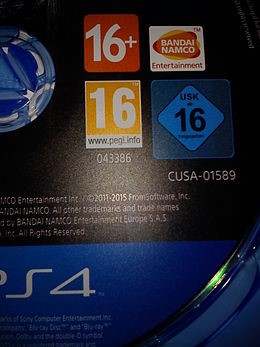
As much as video games are considered to be released for the young age. There are couple of mature players around the globe and thus game developers are ought to make a contend that they can enjoy.
ESRB RATINGS GUIDE
The Entertainment Software Rating Board (ESRB) ratings provide concise and objective information about the content in video games and apps so consumers, especially parents, can make informed choices. ESRB ratings have three parts:
- Rating Categories suggest age appropriateness
- Content Descriptors indicate content that may have triggered a particular rating and/or may be of interest or concern
- Interactive Elements inform about interactive aspects of a product, including the users’ ability to interact, the sharing of users’ location with others, if personal information may be shared with third parties, if in-app purchases of digital goods are completed, and/or if unrestricted internet access is provided.
RATING CATEGORIES
EARLY CHILDHOOD
Content is intended for young children.
EVERYONE
Content is generally suitable for all ages. May contain minimal cartoon, fantasy or mild violence and/or infrequent use of mild language.
EVERYONE 10+
Content is generally suitable for ages 10 and up. May contain more cartoon, fantasy or mild violence, mild language and/or minimal suggestive themes.
TEEN
Content is generally suitable for ages 13 and up. May contain violence, suggestive themes, crude humour, minimal blood, simulated gambling and/or infrequent use of strong language.
MATURE
Content is generally suitable for ages 17 and up. May contain intense violence, blood and gore, sexual content and/or strong language.
ADULTS ONLY
Content suitable only for adults ages 18 and up. May include prolonged scenes of intense violence, graphic sexual content and/or gambling with real currency.
RATING PENDING
Not yet assigned a final ESRB rating. Appears only in advertising, marketing and promotional materials related to a “boxed” video game that is expected to carry an ESRB rating, and should be replaced by a game’s rating once it has been assigned.
NOTE: Rating Category assignments can also be based upon a game or app’s minimum age requirement.
CONTENT DESCRIPTORS
- Alcohol Reference – Reference to and/or images of alcoholic beverages
- Animated Blood – Discoloured and/or unrealistic depictions of blood
- Blood – Depictions of blood
- Blood and Gore – Depictions of blood or the mutilation of body parts
- Cartoon Violence – Violent actions involving cartoon-like situations and characters. May include violence where a character is unharmed after the action has been inflicted
- Comic Mischief – Depictions or dialogue involving slapstick or suggestive humour
- Crude Humour – Depictions or dialogue involving vulgar antics, including “bathroom” humour
- Drug Reference – Reference to and/or images of illegal drugs
- Fantasy Violence – Violent actions of a fantasy nature, involving human or non-human characters in situations easily distinguishable from real life
- Intense Violence – Graphic and realistic-looking depictions of physical conflict. May involve extreme and/or realistic blood, gore, weapons and depictions of human injury and death
- Language – Mild to moderate use of profanity
- Lyrics – Mild references to profanity, sexuality, violence, alcohol or drug use in music
- Mature Humour – Depictions or dialogue involving “adult” humour, including sexual references
- Nudity – Graphic or prolonged depictions of nudity
- Partial Nudity – Brief and/or mild depictions of nudity
- Real Gambling – Player can gamble, including betting or wagering real cash or currency
- Sexual Content – Non-explicit depictions of sexual behaviour, possibly including partial nudity
- Sexual Themes – References to sex or sexuality
- Sexual Violence – Depictions of rape or other violent sexual acts
- Simulated Gambling – Player can gamble without betting or wagering real cash or currency
- Strong Language – Explicit and/or frequent use of profanity
- Strong Lyrics – Explicit and/or frequent references to profanity, sex, violence, alcohol or drug use in music
- Strong Sexual Content – Explicit and/or frequent depictions of sexual behaviour, possibly including nudity
- Suggestive Themes – Mild provocative references or materials
- Tobacco Reference – Reference to and/or images of tobacco products
- Use of Alcohol – The consumption of alcoholic beverages
- Use of Drugs – The consumption or use of illegal drugs
- Use of Tobacco – The consumption of tobacco products
- Violence – Scenes involving aggressive conflict. May contain bloodless dismemberment
INTERACTIVE ELEMENTS
- Shares Info – Indicates that personal information provided by the user (e.g., e-mail address, phone number, credit card info, etc.) is shared with third parties
- Shares Location – Includes the ability to display the user’s location to other users of the app
- Users Interact – Indicates possible exposure to unfiltered/uncensored user-generated content, including user-to-user communications and media sharing via social media and networks
- Digital Purchases – Enables purchases of digital goods completed directly from within the app (e.g., purchases of additional game content, levels, downloadable music, etc.)
- Unrestricted Internet – Product provides access to the internet
“Online Interactions Not Rated by the ESRB” – Warns those who intend to play the game online about possible exposure to chat (text, audio, video) or other types of user-generated content (e.g., maps, skins) that have not been considered in the ESRB rating assignment.
“Online Music Not Rated by the ESRB” – Warns that songs that are streamed or downloaded as add-ons for music-based games have not been rated and that their content has not been considered in the ESRB rating assignment.
NOTE: The “Shares Info,” “Shares Location,” “Users Interact,” “Digital Purchases” and “Unrestricted Internet” notices are assigned to digitally delivered games and apps whereas the Online and Music notices typically apply only to online-enabled boxed video games.
BY; Fred Juma
 TECH CAFE